🔌 ABOUT ELECTRONICS MECHANIC TRADE
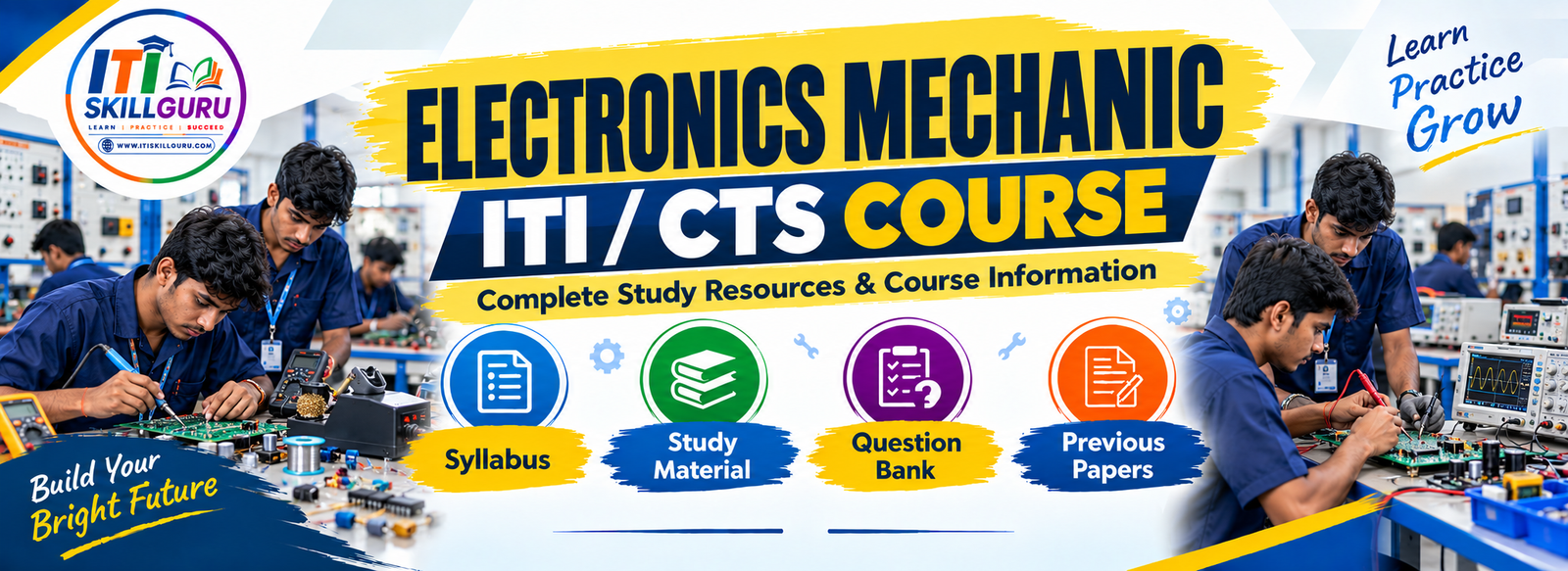
🔌 ABOUT ELECTRONICS MECHANIC TRADEThe Electronics Mechanic trade develops technical knowledge and practical skills related to electronic components, circuits, measuring instruments, digital systems and equipment servicing. Trainees learn soldering, circuit testing, fault diagnosis and safe handling of electronic devices. Explore the resources below for the Electronics Mechanic ITI/CTS course.
📚 EXPLORE ELECTRONICS MECHANIC COURSE RESOURCES
📄 Previous Papers (Coming soon)
🎥 Video Classes (Coming soon)
🔗 Important Links (Coming soon)
🔌 Electronics Mechanic ITI/CTS Course Information and Learning Guide
🔌 Electronics Mechanic ITI/CTS Course Information and Learning GuideThe Electronics Mechanic ITI/CTS course provides practical training in electronic circuits, components, test equipment, digital electronics and equipment repair. Students learn to assemble circuits, take measurements, identify faults and perform servicing operations while following electrical and workshop safety procedures.
📘 Electronics Mechanic Course Syllabus
📘 Electronics Mechanic Course SyllabusThe syllabus includes trade theory, trade practical, workshop calculation and science, engineering drawing and employability skills. Students should verify the applicable training year, NSQF level and latest syllabus version before using any study material or examination resource.
🔋 Electronic Components and Basic Circuits
🔋 Electronic Components and Basic CircuitsStudents study resistors, capacitors, inductors, transformers, diodes, transistors and integrated circuits. Practical activities may include identifying components, reading colour codes, testing devices and assembling basic rectifier, filter, amplifier and power-supply circuits.
🛠️ Soldering, PCB Assembly and Testing
🛠️ Soldering, PCB Assembly and TestingTrainees learn safe soldering and desoldering techniques, component mounting, printed circuit board inspection and repair. They use multimeters, oscilloscopes, signal generators and other instruments to measure voltage, current, resistance and waveforms while diagnosing circuit faults.
💻 Digital Electronics and Microcontroller Systems
💻 Digital Electronics and Microcontroller SystemsThis section introduces number systems, logic gates, digital circuits, memory devices, microprocessors and microcontrollers. Students may practise simple interfacing, testing and programming activities according to the current syllabus and available laboratory equipment.
📺 Electronic Equipment Servicing and Maintenance
📺 Electronic Equipment Servicing and MaintenancePractical training may cover power supplies, inverters, communication equipment, consumer electronic devices and other electronic systems. Students learn systematic troubleshooting, preventive maintenance, replacement of defective components and safe testing of equipment.
✅ Workshop Safety and Responsible Electronic Practices
✅ Workshop Safety and Responsible Electronic PracticesStudents must isolate the power supply before working, use antistatic protection where required and handle components with suitable tools. Damaged batteries, circuit boards and electronic waste should be stored and disposed of responsibly according to applicable institutional and environmental guidelines.
🎯 Examination Preparation and Career Opportunities
Regular circuit practice, diagrams, short notes, measurement exercises and self-assessment can help students prepare for theory examinations and skill tests. After completing the course, candidates may explore opportunities in electronics servicing, manufacturing, maintenance, communication systems and technical support.
🔗 Source and Content Information
🔗 Source and Content InformationITI Skill Guru provides original guidance along with links to useful educational resources. External documents remain the property of their respective publishers or organisations. Students should verify the latest syllabus, examination pattern and official information before relying on any document. Explore our CTS / ITI Courses page for other trade-wise learning resources.